Photo of The Day for


Steps for preparing yourself and property for tropical weather systems
Tuesday, August 31, 2010 
-
We would like to remind the public to monitor various weather sources and prepare yourself for this busy hurricane season. Below are recomendations provided by the Federal Emergency Managment Administration.

Hurricanes are severe tropical storms that form in the southern Atlantic Ocean, Caribbean Sea, Gulf of Mexico and in the eastern Pacific Ocean. Scientists can now predict hurricanes, but people who live in coastal communities should plan what they will do if they are told to evacuate.

Step 1: Get A Kit / "To-Go Bag"
  • Get an Emergency Supply Kit, which includes items like non-perishable food, water, a battery-powered or hand-crank radio, extra flashlights and batteries. You may want to prepare a portable kit and keep it in your car. This kit should include:
    • Copies of prescription medications and medical supplies;
    • Bedding and clothing, including sleeping bags and pillows;
    • Bottled water, a battery-operated radio and extra batteries, a first aid kit, a flashlight;
    • Copies of important documents: driver's license, Social Security card, proof of residence, insurance policies, wills, deeds, birth and marriage certificates, tax records, etc.
  • Make sure you have a "to-go bag" ready in case you need to evacuate, include:
    • Water and non-perishable food;
    • Battery operated radio and batteries so you can get important information from local officials;
    • First aid kit;
    • Flashlight;
    • Maps
    • Important documents such as proof residence, pictures of your family including pets, insurance policies, and tax records;
    • Comfortable clothing and blankets;
    • Unique family needs such as prescription medications, pet supplies, infant supplies or any other unique need your family may have;
Step 2: Make a Plan Prepare your family

  • Make a Family Emergency Plan. Your family may not be together when disaster strikes, so it is important to know how you will contact one another, how you will get back together and what you will do in case of an emergency
  • Plan places where your family will meet, both within and outside of your immediate neighborhood.
  • It may be easier to make a long-distance phone call than to call across town, so an out-of-town contact may be in a better position to communicate among separated family members.
  • You may also want to inquire about emergency plans at places where your family spends time: work, daycare and school. If no plans exist, consider volunteering to help create one.
  • Plan to Evacuate
    • Identify ahead of time where your family will meet, both within and outside of your immediate neighborhood.
    • Identify several places you could go in an emergency, a friend's home in another town, a motel or public shelter.
    • If you do not have a car, plan alternate means of evacuating.
    • If you have a car, keep a half tank of gas in it at all times in case you need to evacuate.
    • Take your Emergency Supply Kit.
    • Take your pets with you, but understand that only service animals may be permitted in public shelters. Plan how you will care for your pets in an emergency.
  • Take a Community Emergency Response Team (CERT) class from your local Citizen Corps chapter. Keep your training current.
Step 3: Be Informed Familiarize yourself with the terms that are used to identify a hurricane.

  • A hurricane watch means a hurricane is possible in your area. Be prepared to evacuate. Monitor local radio and television news outlets or listen to NOAA Weather Radio for the latest developments.
  • A hurricane warning is when a hurricane is expected in your area. If local authorities advise you to evacuate, leave immediately.
  • Hurricanes are classified into five categories based on their wind speed, central pressure, and damage potential. Category Three and higher hurricanes are considered major hurricanes, though Categories One and Two are still extremely dangerous and warrant your full attention.
Saffir-Simpson Hurricane Scale Scale Number (Category) Sustained Winds (MPH) Damage Storm Surge 1 74-95 Minimal: Unanchored mobile homes, vegetation and signs. 4-5 feet 2 96-110 Moderate: All mobile homes, roofs, small crafts, flooding. 6-8 feet 3 111-130 Extensive: Small buildings, low-lying roads cut off. 9-12 feet 4 131-155 Extreme: Roofs destroyed, trees down, roads cut off, mobile homes destroyed. Beach homes flooded. 13-18 feet 5 More than 155 Catastrophic: Most buildings destroyed. Vegetation destroyed. Major roads cut off. Homes flooded. Greater than 18 feet

  • Hurricanes can produce widespread torrential rains. Floods are the deadly and destructive result. Slow moving storms and tropical storms moving into mountainous regions tend to produce especially heavy rain. Excessive rain can trigger landslides or mud slides, especially in mountainous regions. Flash flooding can occur due to intense rainfall. Flooding on rivers and streams may persist for several days or more after the storm. Learn more about preparing your home or business for a possible flood by reviewing the Floods page.
Prepare Your Home
 

  • Cover all of your home's windows with pre-cut ply wood or hurricane shutters to protect your windows from high winds.
  • Plan to bring in all outdoor furniture, decorations, garbage cans and anything else that is not tied down.
  • Keep all trees and shrubs well trimmed so they are more wind resistant.
  • Secure your home by closing shutters, and securing outdoor objects or bringing them inside.
  • Turn off utilities as instructed. Otherwise, turn the refrigerator thermostat to its coldest setting and keep its doors closed.
  • Turn off propane tanks.
  • Ensure a supply of water for sanitary purposes such as cleaning and flushing toilets. Fill the bathtub and other large containers with water.
  • Find out how to keep food safe during and after and emergency by visiting: http://www.foodsafety.gov/keep/emergency/index.html
Prepare Your Business
 

Plan to stay in business, talk to your employees, and protect your investment.

  • Carefully assess how your company functions, both internally and externally, to determine which staff, materials, procedures and equipment are absolutely necessary to keep the business operating.
  • Identify operations critical to survival and recovery.
  • Plan what you will do if your building, plant or store is not accessible.
    • Consider if you can run the business from a different location or from your home.
    • Develop relationships with other companies to use their facilities in case a disaster makes your location unusable.
  • Learn about programs, services, and resources at U.S. Small Business Administration.
Listen to Local Officials
Learn about the emergency plans that have been established in your area by your state and local government. In any emergency, always listen to the instructions given by local emergency management officials.

Federal and National Resources Find additional information on how to plan and prepare for a hurricane by visiting the following resources:

Keep in mind a disaster can disrupt mail service for days or even weeks. For those who depend on the mail for their Social Security benefits, a difficult situation can become worse if they are evacuated or lose their mail service &ndash...  [  more  ]  

 
Rescue 151
Sunday, August 22, 2010 
-
Level Rescue near completion after almost a month of delays due to equipment problems. The rescue is getting its final inspections from Hurst Technicains, and other parties before committee heads out  to hopefully take delivery of the vehicle on or about Monday, August 30,2010.


2nd Alarm Building Fire In The 102 Box
Wednesday, July 14, 2010 
-
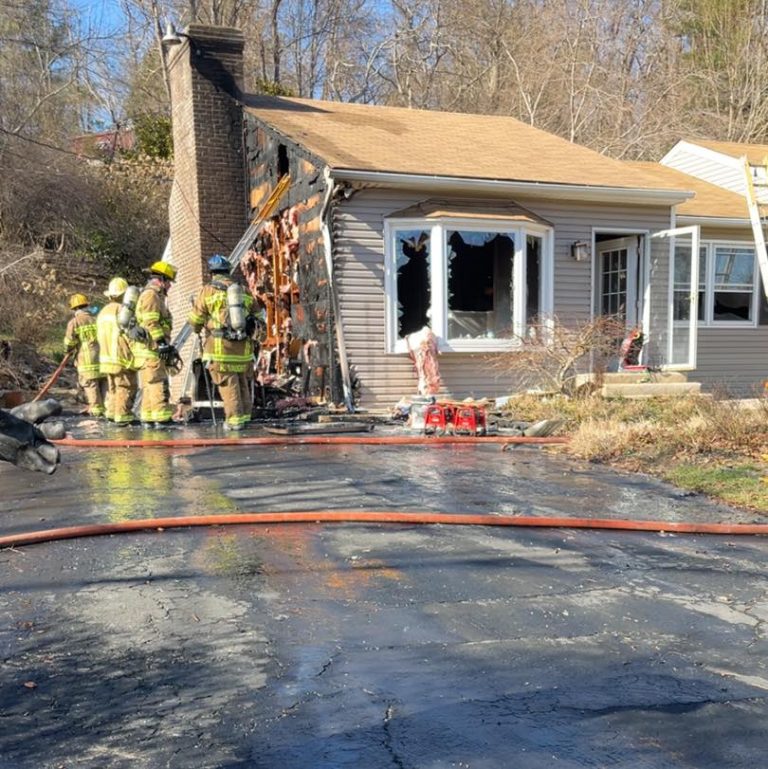
On Tuesday morning at 04:59 Level and Darlington Fire Companies were alerted for a building fire on Glenview Ct. Engine 113 and Tanker 121 called enroute shortly after dispatch and were advised that the home owner had smoke coming from the roof. Units arrived with heavy smoke showing from a 2 story approximatly 60 by 60 2 story structure housing multiple vehicles and shop equiptment. Multipule handlines were placed in service.Engine 112 arrived and laid a supply line to the scene. A second alarm was requested at 05:16.Crews removed several vehicles from the building as firefighting operations were taking place. A draft was established for water supply at a near by pond by Supply 181 and Mini Pumper 545. The fire is being investigated by the Maryland State Fire Marshals Office.

Command Chief 1 Remines

Operations Chief 1-1 Gallion

Units on scene:

113
121
112
111
181
914
911
912
512
211
212
315
1221
191
545
199
Cecil eng 7
Cecil tanker 7
Fm43
Photos courtesy of Lt 5-2 and Chief 1-2


Update on Rescue 151
Friday, July 2, 2010 
-
          Progress on Rescue 151 it is out of the paint shop, and mounting of lights and equipment has started. The committee sent  tools out to be mounted by the factory. The expected date for delivery of this vehicle is July 26, 2010. The committee will be heading out to pick up the vehicle, and they are hoping to have the vehicle placed in-service by late August early September.  


Level VFC Mourns The Loss Of One Of Our Own
Monday, May 31, 2010 
-
Leona Dorbert joined Level Volunteer Fire Company in 1986 as an EMS member.  She later joined the Level Ladies Auxiliary accumulating 20 years of service, while still riding as an active EMS member.  In 1998 Leona started the Level Majorettes. these young ladies were her pride and joy.  She worked hard every year to prepare them for the parades, many times making the costumes herself.  She was also a charter member of the Red Knights motorcycle club.  No matter what Leona was doing she always did her Level Best even after she was diagnosed.  She will be a missed member of our fire company family.

 
Second Alarm Barn Fire In The First Due
Sunday, May 30, 2010 00:25
-
On Sunday morning Level and Darlington Fire Companies were alerted for a barn fire on Old Level Rd. Engine 113 arrived with heavy fire visible from a distance away requesting a second alarm assignment. Upon their arrival ,a 60 by 40 large building used to store farm equiptment and hay was fully involved with the roof collapsed. Engine 113s crew made a partial lay of 5 inch hose and placed two handlines in service. Engine 112 and 111 finished the lay which was approximatly 2300ft. The folding tank off of tanker 121 was utilized and engine 111 pumped the tank.The fire damaged several tractors and other pieces of  farm equiptment. As crews arrived at the scene the fire was contained and the metal roofing removed to hit remaining areas.The second alarm assignment brought equiptment from Darlington,Havre de Grace,Aberdeen,Bel Air,Aberdeen Proving Ground Fire Department, and Cecil County Water Witch Fire Companies to the scene. Whiteford VFC provided stand by coverage and assisted in getting Levels equiptment back in service.

"Old Level Rd Command"   Chief 1-2

Operations                              Chief 9-2

Safety                                        Captain Polk

Water Supply                          Chief 2-1


Rescue Box on 155
Thursday, May 27, 2010 
-
On May 27th 2010, Level VFC was alerted for a 10-50 PI with rescue @ Aldino Rd and Level Rd. Monitor 139 (C. Polk) was on scene within minutes of the alert with a 3 vehicle 10-50 with heavy entrapment, and established command. He requested a 2nd due ALS unit and Aviation for a priority 1 category “A” patient. Medic 191 and Engine 111 called enroute a short time after dispatch. Units arrived and went right to work removing the driver and passenger door, a complete roof removal and cutting away the rear part of the driver’s side with the saw-zaw. Medic 292 handled a priority 3 patient from one vehicle, while IV 191 and the Foundation Supervisor handled the Category “A” patient. Trooper 1 landed at the scene. After the extrication was complete crews assisted the trooper with loading the patient. Units cleared a short time later.
 
 
Units on scene:
Engine 111
Engine 113
IV 191
Foundation Supervisor
Medic 292
 
Command: C. Polk until transferring command to Chief 1-2


Rescue 151 update
Tuesday, May 18, 2010 
-
On Monday May 17th Levels Rescue Committee traveled out to Myersdale, PA to the 4-Guys Factory. The Committee went for a Pre-Paint inspection. The unit is expected to be finished by the middle of July.


*Check back for Pictures later*


Top 10 responders for April 2010
Tuesday, May 18, 2010 
-
A congratulations goes out to the following members for being the top responders for April 2010.

Total Fire Calls: 50

1. D/O Russell Gallion-45
2. Firefighter Shane Sawyer-45
3. D/O Buddy Testerman- 37
3. Firefighter/EMT Clinton Polk-21
4. D/O Jimmy Martin-32
5. Asst Chief Nolan Gallion Jr-30
6. Captain Dan Hawkins-30
7. Firefighter/EMT Clinton Polk-30
8. Firefighter/EMTNolan Gallion III-28
9. Chief Brian Remines-26
10. Asst Chief Jeff Standiford-25

Total EMS Calls: 42

1. Firefighter/First Responder Shane Sawyer-26
2. Firefighter/EMT Nolan Gallion III-7
3. Probie Libby Harrison-7
4. EMT Rebekah Jewett-7
5. EMS Capt. Sandi Gallion-6
6. EMT/IVT Vickie Hyde-6
7. Captain Dan Hawkins-4
8. Probie Judi Miles-4
9. EMS Lt Michelle Gallion-3
10. D/O Russell Gallion-3
11. EMT Lindsay Leedy-3
12. Firefighter/EMT Clinton Polk-3
13. Firefighter/Paramedic Rocky Workman-3


Level attends Churchville Elm Schools "May Day"
   
Saturday, May 15, 2010 
-
The Level VFC attended Churchville Elm Schools “May Day” on Saturday. IV192 was at the school for about an hour before having to leave to handle a Seizure patient in the 136 Box. While at the school the crew showed children and adults the unit and Equipment, and answered questions. Level has attended the event for several years now and looks forward to going back each year.


Search for News stories: RSS FEED
Search by : Month | Year | Keyword | Category